A little over a year ago, two friends from the Baltics in Chiang Mai came up with an idea: what if we organize our favorite celebration from our countries here in Chiang Mai? In the beginning, it seemed a little silly, and maybe even arrogant. What do you mean, we want people in tropical Thailand to celebrate a Northern European pagan tradition? Most people can't find the Baltics on the map, why would people even show up? But we kept coming back to it, because Chiang Mai has become one of the most active spaces for nomad local community events in Southeast Asia, and we wanted to add something of our own.
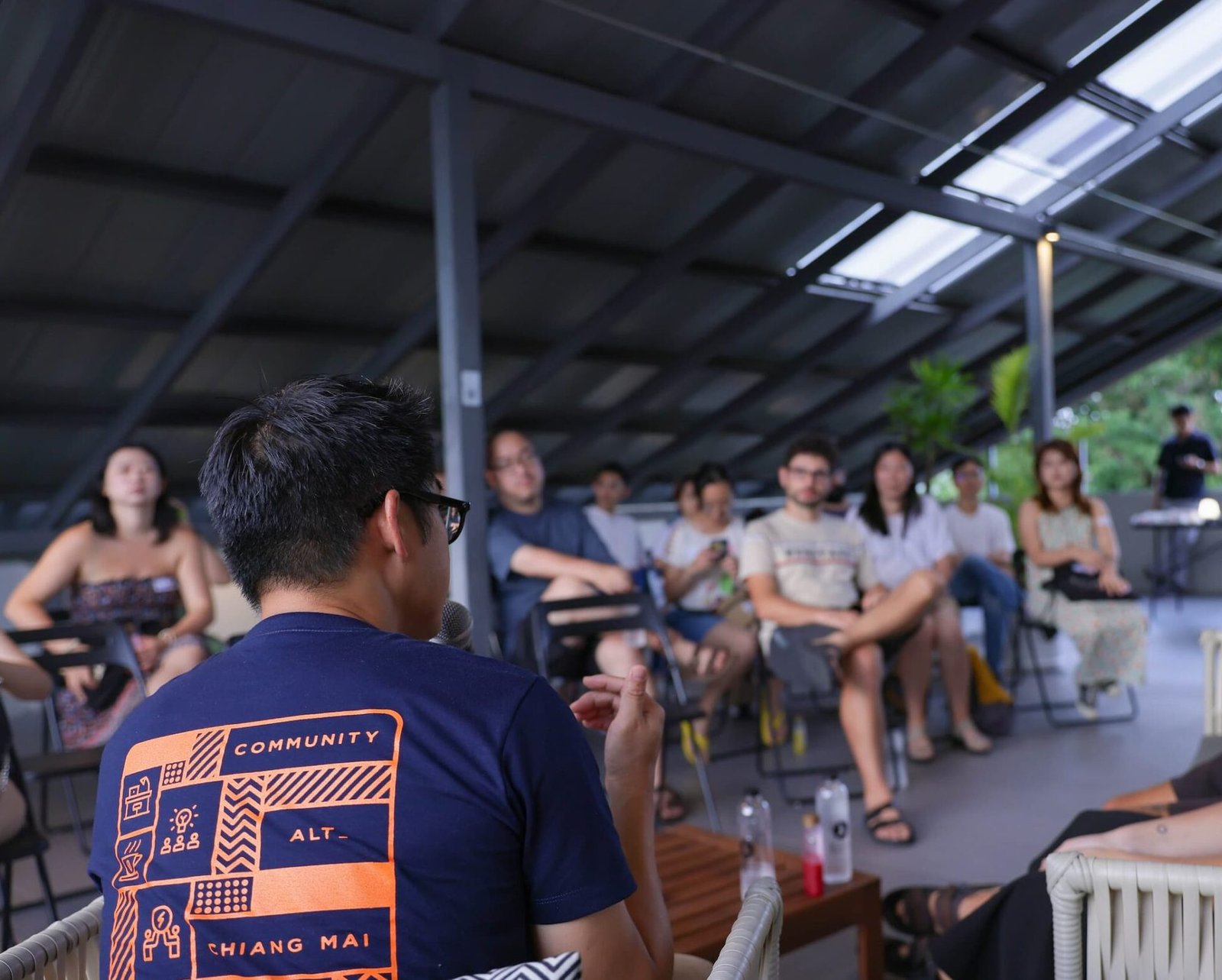
Despite our initial hesitations, we went to pitch this idea to John of Alt_ChiangMai co-living and co-working space. He and his team loved it, and just recently, we held the event for the second time.
For Alt_ and its neighbors in Wat Ket, it's been something unique to support, and a great way to bring energy to the area. But in my mind, the event exemplifies the foundational ideas of what CosmoLocalCNX is, and the values it stands for.
Some people say that in Chiang Mai, there are two different groups operating in parallel: the local Thais and the remote-working digital nomads. And their entire calendars of free-time activities, events, and celebrations rarely overlap. You can belong to one and never interact with the other. That feels like a loss on both sides. Nomads end up living in a place they never actually understand, and locals rarely get a say in shaping the experiences happening around them in their own city. With the Midsummer, and the CosmoLocalCNX month, we are building something different, and the Midsummer festival is the case study that such experiences are possible.
About the Baltic Midsummer
Midsummer, or the summer solstice, is one of the most important celebrations in the Baltic countries. It is when the day is the longest (observable in the Northern hemisphere), resulting in about 18 hours of sunlight in the Baltics, and it marks the middle of summer. The festivities celebrate the seasonality of nature, togetherness, and tradition.
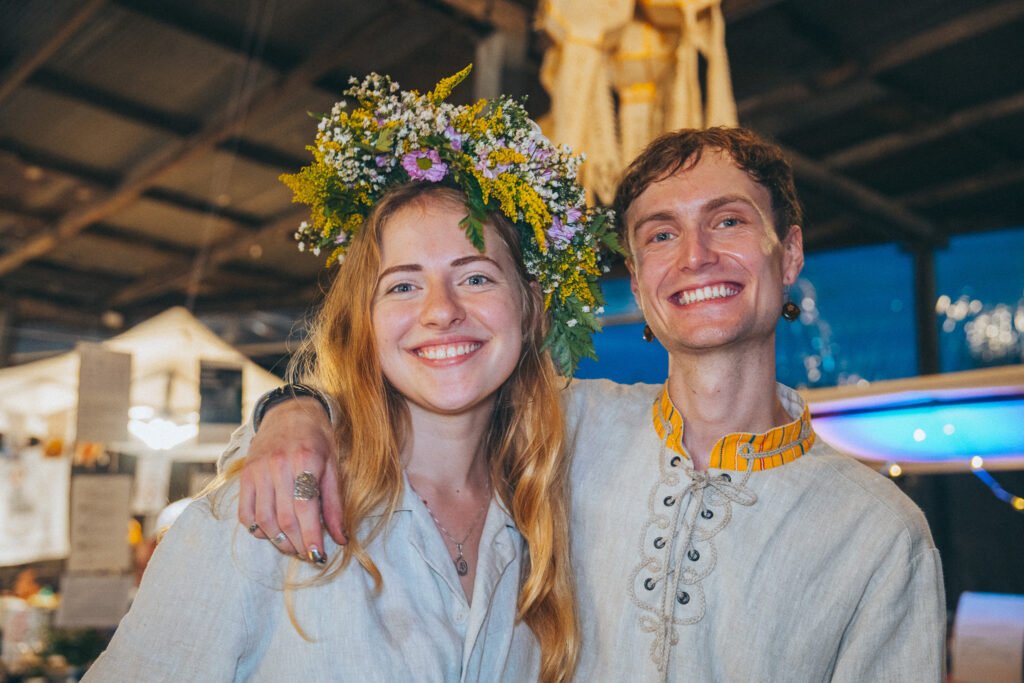
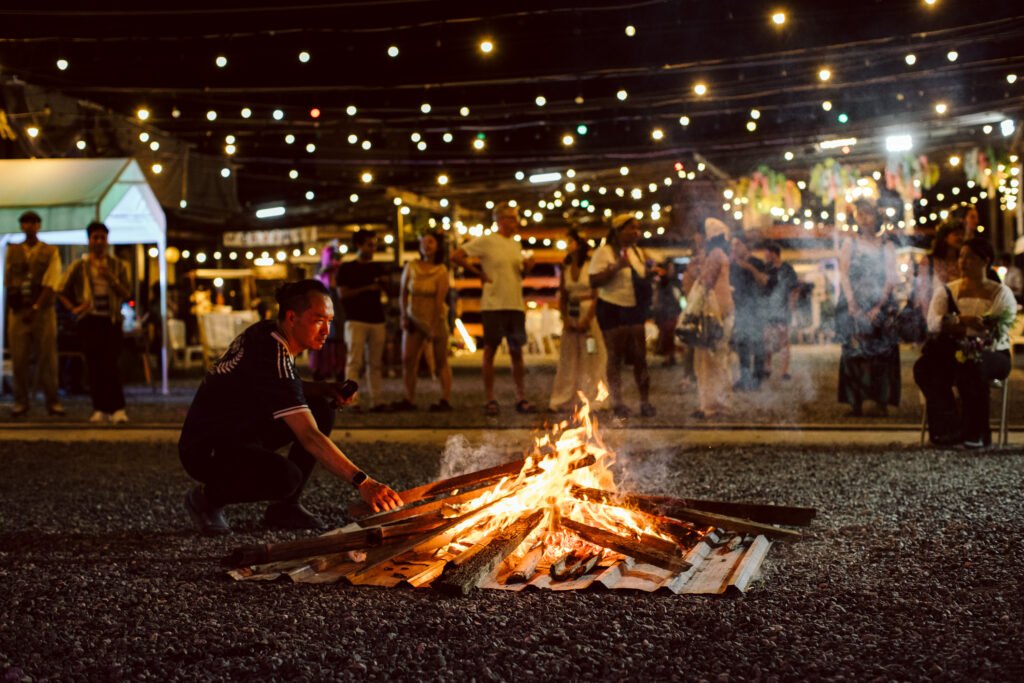
Many countries in Europe, especially in the North, celebrate Midsummer, and countless traditions vary slightly across them. The main ones in the Baltics are: lighting a bonfire and gathering around it with songs and dance, staying awake through the night, dressing in ethnic attire, eating traditional food and drinking plenty of beer, and using plants from the meadows for decoration and other activities. In Latvia, a key part of the Midsummer tradition is weaving flower crowns.
These traditions have strong roots in pagan culture: the religion practiced by tribes in the region before Christianity, and one that remains a major presence in the Baltic countries today. The connection to these ancestral practices made me think about the parallels between the Baltic tribes and the tribal faiths of Northern Thailand. Many native cultures, it turns out, share similar values.
Although the Baltic and Northern Thai cultures developed completely separately, thousands of kilometers apart, we found common ground: respect for nature and herbalist practices, a love of good food, a sense of community, and connecting with others through dance. These are values that have been central to native populations across the world, but modern life has made us forget them, focusing instead on what differs between us. This became the guiding idea behind the second year's event.
FIRST YEAR
In the first year, we focused fully on the Baltics. We were supported by Visit Estonia and the e-Residency program, so the event functioned more as us presenting our own culture and informing people about the opportunities with Estonia's e-Residency.
The gathering drew about 150 people and set a great precedent for future collaboration. One of the key challenges we encountered was the lack of people from the Baltics available as facilitators. We focused on implementing our vision strictly and aimed to convey as much content as possible, which meant we ended up with Baltic-themed workshops (like one on language) run by Thai facilitators, which, looking back, wasn't the best idea. The next year, we realized that the experience of the facilitators and the guests mattered more than covering a specific topic, so we cut any workshop we weren't able to fully deliver on.
SECOND YEAR
In the second year, we aimed to go deeper and designed the event around the idea of "Reciprocity with Place" (a concept foundational to CosmoLocalCNX as well). It stopped being about the Baltics and became instead about the interaction of the visiting and hosting cultures. A Thai government development agency, PMU-A, became our main sponsor. This year, the event was built on the common values between Baltic culture and Northern Thai Lanna culture: a reverence for seasonality, plants, food, land, and community ritual.
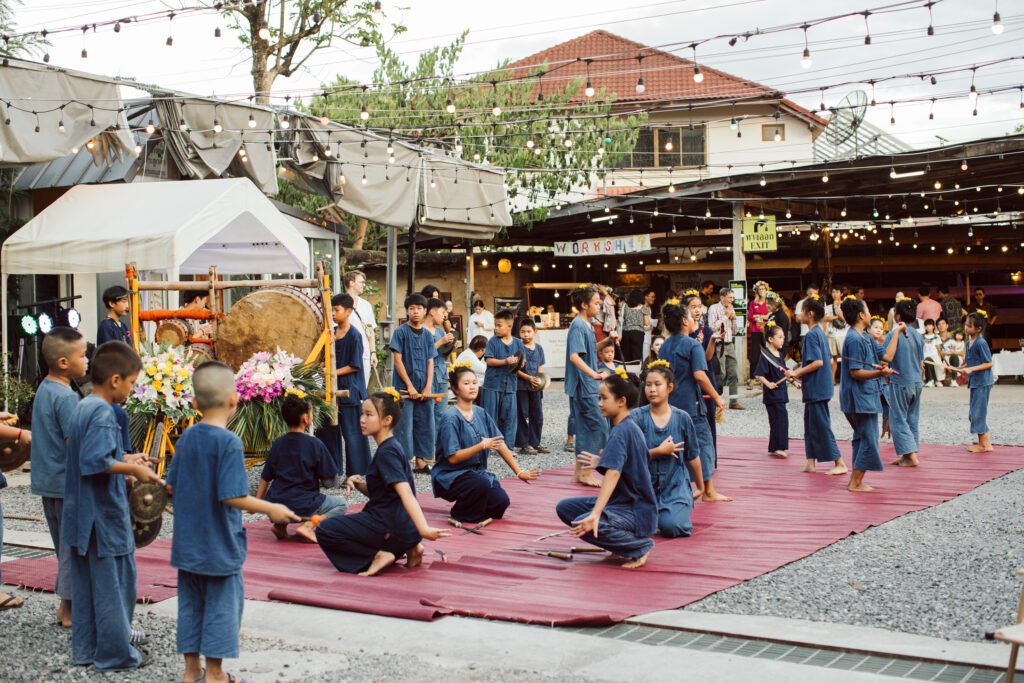
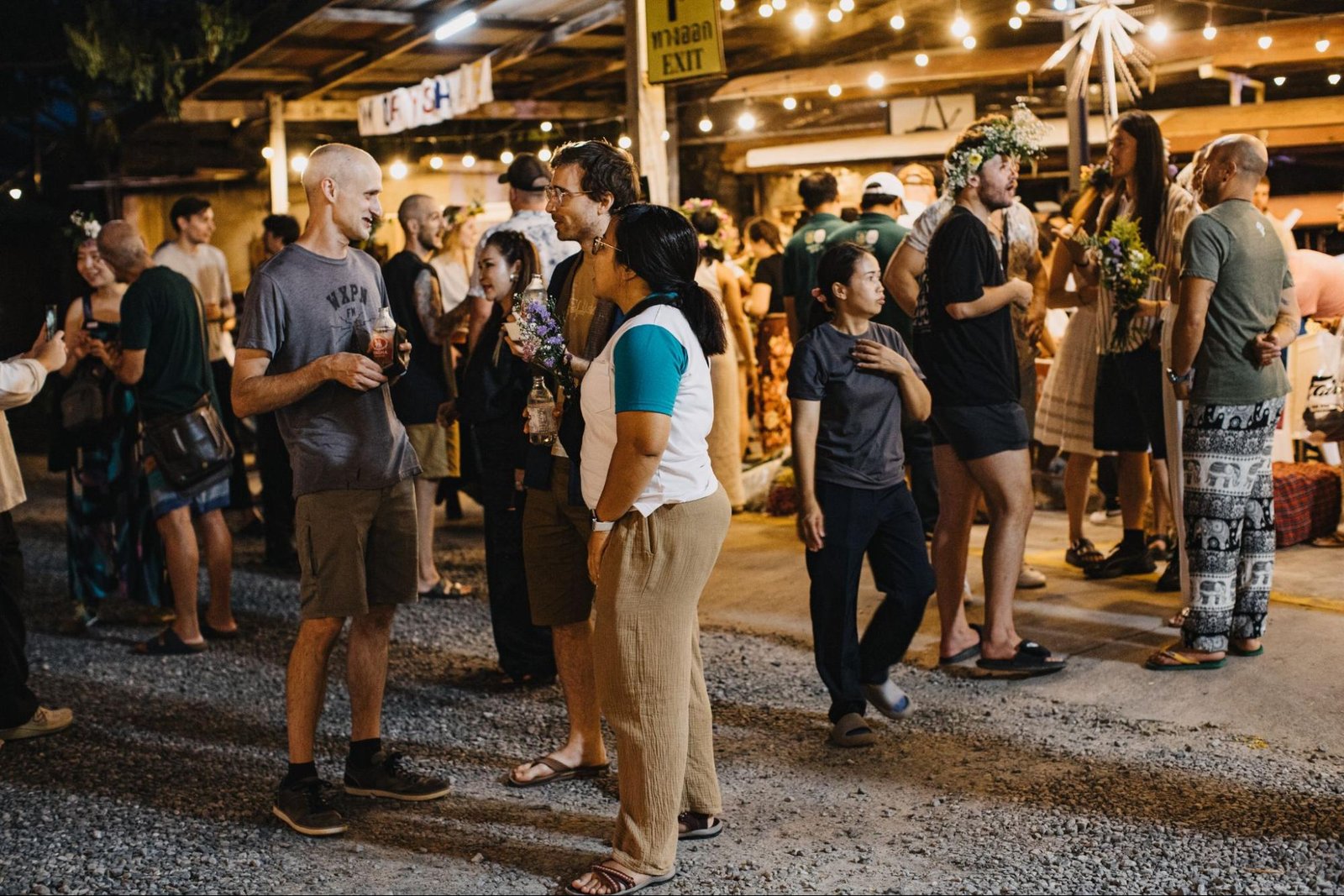
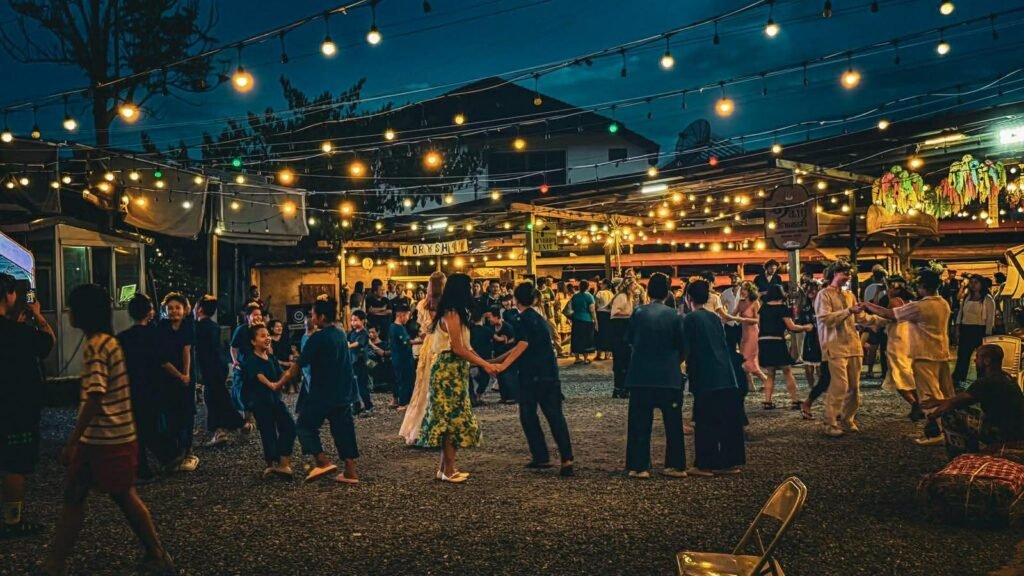
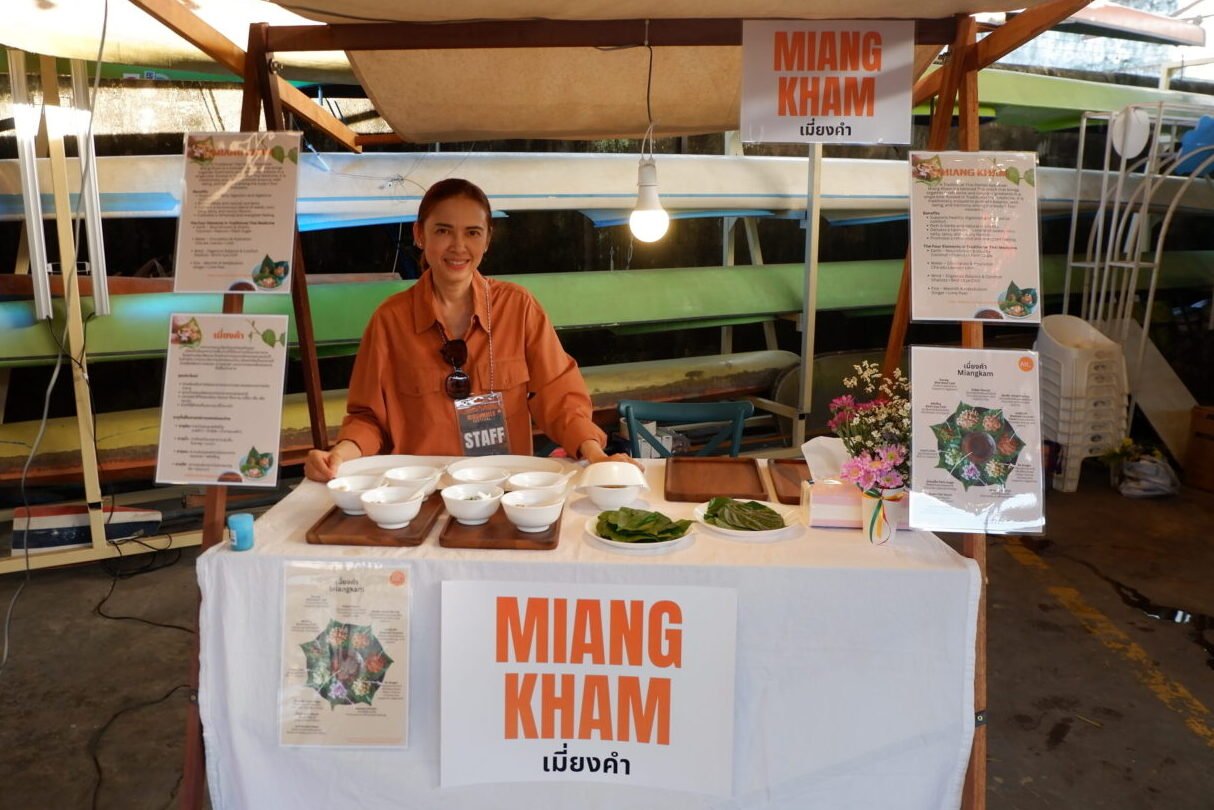
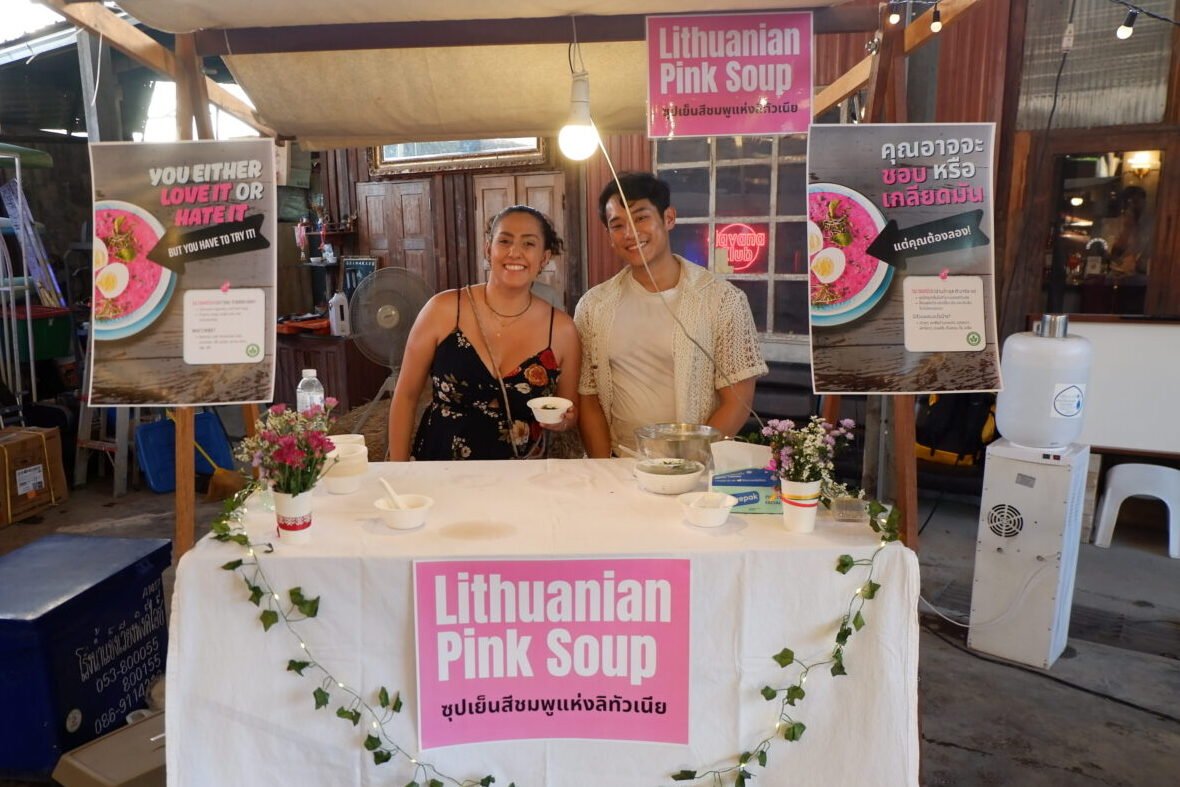
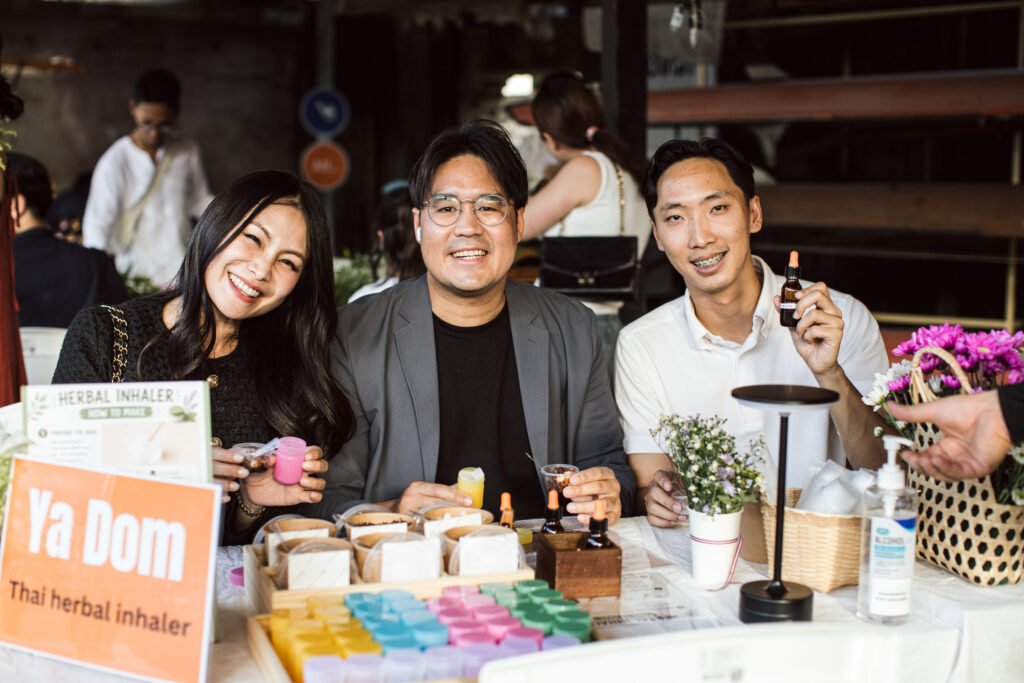
This was reflected in the day's programming: opening with a Lanna dance performance by children from the local temple, teaching attendees steps of both Lanna and Baltic dances, sharing Miang Kham snacks and Lithuanian pink soup, and bringing attention to herbalist practices by creating Thai herbal inhalers. We had about 200 people attending, and thanks to the theme bridging together nomad & local cultures, the air was filled with great energy, noticed by seeing people linger until late night.
We had about 200 people attending, and thanks to the theme bridging together nomad and local cultures, the air was filled with great energy, noticed by seeing people linger until late night. It served as an example of a co-created nomad local community event where both cultures were honored, and community engagement came first.
Main lessons from organizing nomad community events in Chiang Mai
Some of the lessons learned are also what makes this event special. When talking to lessons, people normally would say - we learned it the hard way - well, in this case, that sentence is not applicable, and we learned through the way of the community responding to our initiative.
Activate your local community
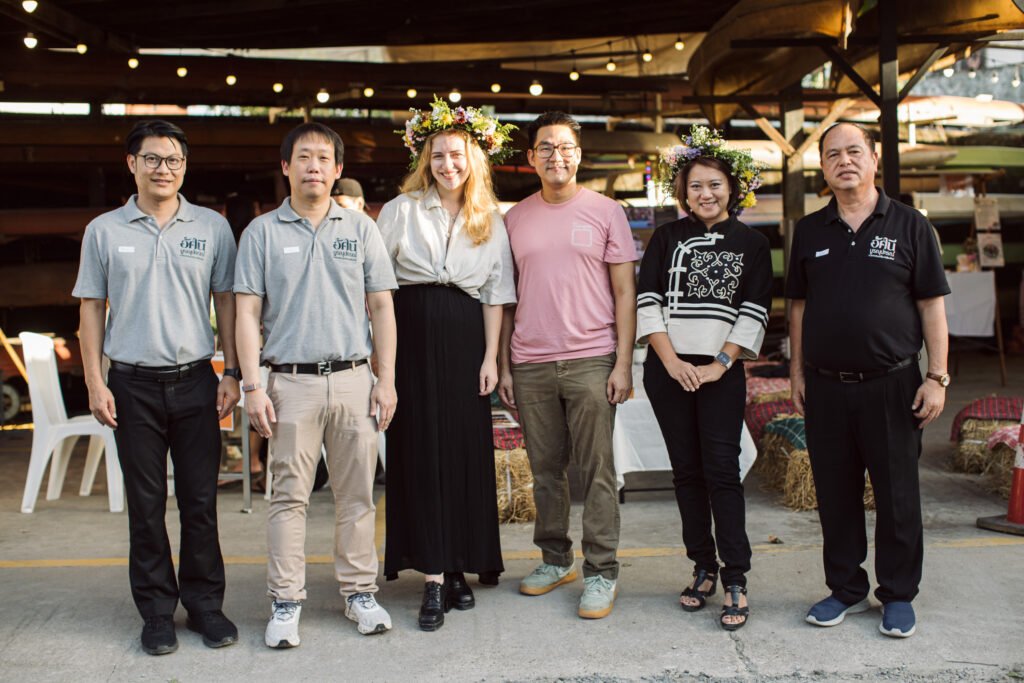
From the beginning, it was crucial for us to host the event in Wat Ket, near Alt_PingRiver co-working space, because it is the neighborhood where our nomad community gathers, so it needs to be the same neighborhood where we foster connections with locals. We are lucky to have Anusarn Sanpakoi right next door: a historical community space, and today one of CosmoLocalCNX's main partners.
Our success was largely dependent on the venue, and they took extra steps to help us. When you're building something for the people who run the restaurant you get lunch from, or the coffee shop you go to every morning, the stakes are personal, and nobody wants to be the reason that relationship sours. When the scale of an event is smaller, the importance of relationships to its success is higher, because the event is built on them.
Connect beyond language barriers
Find ways to connect people that do not involve talking. The event runs in both Thai and English; all the workshops are in both, and we ensure that in every station there is one Thai-speaking person and one English-speaking person. However, that still does not help to engage people beyond the language barrier. This is where the dance workshops come in place. Dancing together does not require knowing the language, and it might seem like a small thing, but the smiles exchanged when people make eye contact, and the radiating joy from everyone dancing definitely left an impact on me.
Be resourceful
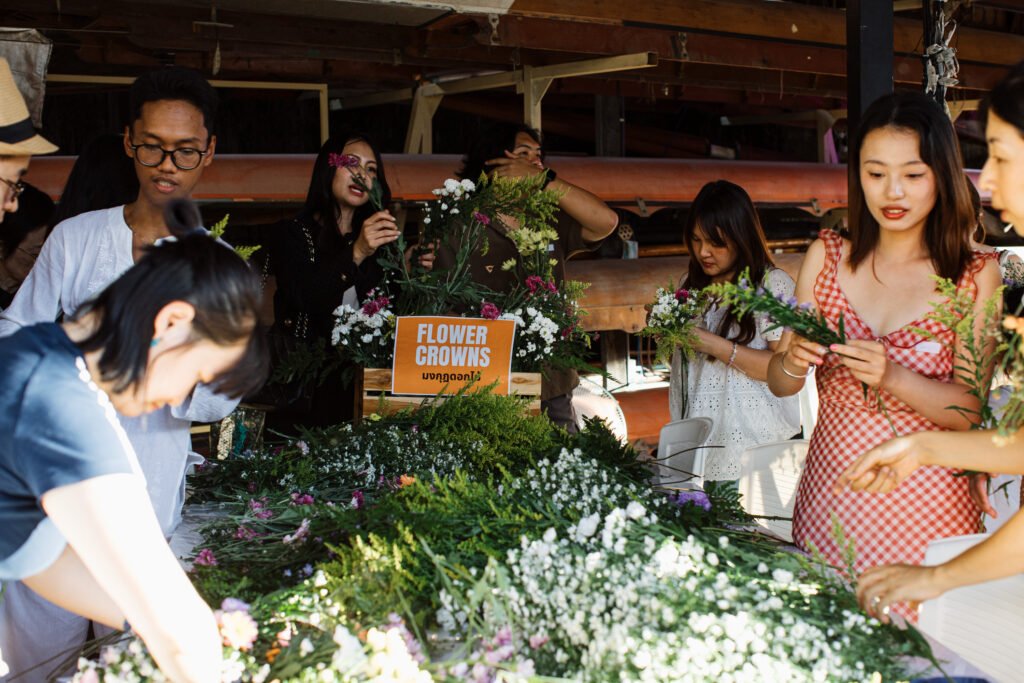
When funds are limited, look for ways to use your resources creatively. We decided to focus on experiences our own team could create, with minimal costs. One of the key activities, for example, was the Flower Crown workshop. Luckily, flowers in Chiang Mai are affordable and offer a ton of aesthetically pleasing options. We organized a pre-event gathering to teach a few volunteers how to make flower crowns and prepare decorations. This further strengthened the community spirit around the celebration, and resulted in beautiful flower arrangements for the space.
Ignite people's curiosity, and spark passion
The event could not have happened without volunteers. Every local staff member was supported by an international volunteer, either from the Alt_ community or our personal networks. We decentralized management of the volunteers, letting people feel ownership over a specific part of the day, further establishing the feeling that this was a shared occasion, not just the organizers'. We shared the vision, but how it came to life was our common result. This can lead to deviations from your original plan, but it's worth it if it increases everyone else's engagement.
Involving nomads in volunteering is a great way to foster community vibes, since nomads often have more flexible schedules and actively look for ways to get involved. From my experience, it's also easier to connect with people through shared activities: conversations feel more natural, and people develop a stronger sense of belonging.
Be respectful and aware of cultural differences
When a foreigner organizes an event with a local team, there will almost certainly be communication challenges: about space arrangement, visual aesthetics, or preparation timelines. Being open to your vision changing is crucial here, if you want to ensure proper representation. If an event is held in Thailand and implemented thanks to a lot of help from local Thais, the result should reflect that, and should not cross anyone's boundaries.
Takeaways
In Chiang Mai, “international event” and “local event” often are treated as opposites: you pick an audience and perform for them. Our version is neither. It is reciprocal: Baltic tradition and Lanna tradition sitting in the same afternoon, neither one decoration for the other. That's the same attitude CosmoLocalCNX is built on. We believe that the interesting version of a nomad hub isn't nomads importing their culture into a host city, or hosts performing "authentic Thailand" for visitors, but something built jointly, with real ownership on both sides.
Concretely, CosmoLocalCNX is a one-month pop-up village in Chiang Mai, built around four residency tracks. Each one led by a local and an international collaborator. It closes with a one-week conference, which is itself unusual for Chiang Mai: organized jointly by local Thai partners and international nomads, rather than one side building it for the other.
The conference design draws directly on what Midsummer taught us, and asks the same question at a bigger scale: how do you actually engage both the Thai community and the digital nomad community together, instead of running two separate programs that happen to share a city. Midsummer was small enough to test that model safely. CosmoLocalCNX is trying to scale it.
The story of the Baltic Midsummer is unique but definitely replicable, and I would love to encourage it. Our event did not start with an institution telling us that we should do it, it came from two nomads who had chosen Chiang Mai as home for those few months, wanted to share the cultural practices of our countries, and also were looking for a way to give back to the community. Skill-sharing and culture-sharing, organized from the ground up rather than imported wholesale, is something nomad communities everywhere could be doing a lot more of.